Why Licensed & Insured Painters Save You Time, Money & Stress

The credential checklist Madison homeowners should use before hiring a painting contractor
Hiring a painter shouldn’t feel like gambling. Yet a lot of homeowners in Madison and the surrounding area only find out what “unlicensed” or “uninsured” really means after something goes wrong—missed deadlines, surprise add-ons, sloppy prep, or a damage claim that turns into an awkward “not my problem” standoff.
If you want a smoother project (and a predictable final bill), prioritize licensed and insured painters. Here’s why that single decision is one of the easiest ways to save time, money, and stress.
Time saved: fewer delays, fewer do-overs, fewer “where did they go?”
Licensed, insured professionals typically run their work like a real operation—not a side hustle. That matters because painting is a process: prep, repairs, priming, coating, cure time, punch list. When the contractor is accountable, that workflow stays tight.
What you avoid with a properly credentialed crew:
- No-shows and schedule chaos (common with under-the-table operations)
- Skipped prep that causes peeling, flashing, or uneven sheen—then forces repainting
- Slow progress because the crew is understaffed or the “painter” is juggling multiple jobs without a plan
If you’re weighing contractors right now, start with the fundamentals: scope, prep standards, timelines, and who’s actually doing the work. A reputable, insured company should be able to explain this clearly before you sign anything.
Learn how Thrift Painting approaches projects from start to finish.
Money saved: insurance reduces your financial exposure
Here’s the blunt truth: if a painter is uninsured and gets hurt on your property, you can end up in the financial blast radius. Likewise, if they damage your home—floors, siding, fixtures, landscaping—an uninsured contractor may simply not have the means (or willingness) to make it right.
Proper insurance helps protect you from:
- Property damage costs (paint overspray, broken fixtures, damaged drywall, scuffed floors)
- Injury-related claims (falls from ladders, jobsite accidents)
- “Cash discount” pitfalls that turn into zero recourse if there’s a dispute
Insurance isn’t a “nice-to-have.” It’s a risk transfer mechanism. When you hire insured painters, you’re not paying extra for paperwork—you’re paying to avoid catastrophic surprise bills.
If you’re planning an exterior project in Madison’s freeze/thaw climate, check exterior service options.
Stress saved: clear contracts, clear responsibility, clear standards
Stress comes from uncertainty: “Will they show up?” “Will the color match?” “Will this start peeling in six months?” Credentialed contractors are more likely to put everything in writing and use repeatable systems so you aren’t babysitting the job.
What “less stress” looks like in real life:
- You get a written scope that specifies what is included (and what isn’t)
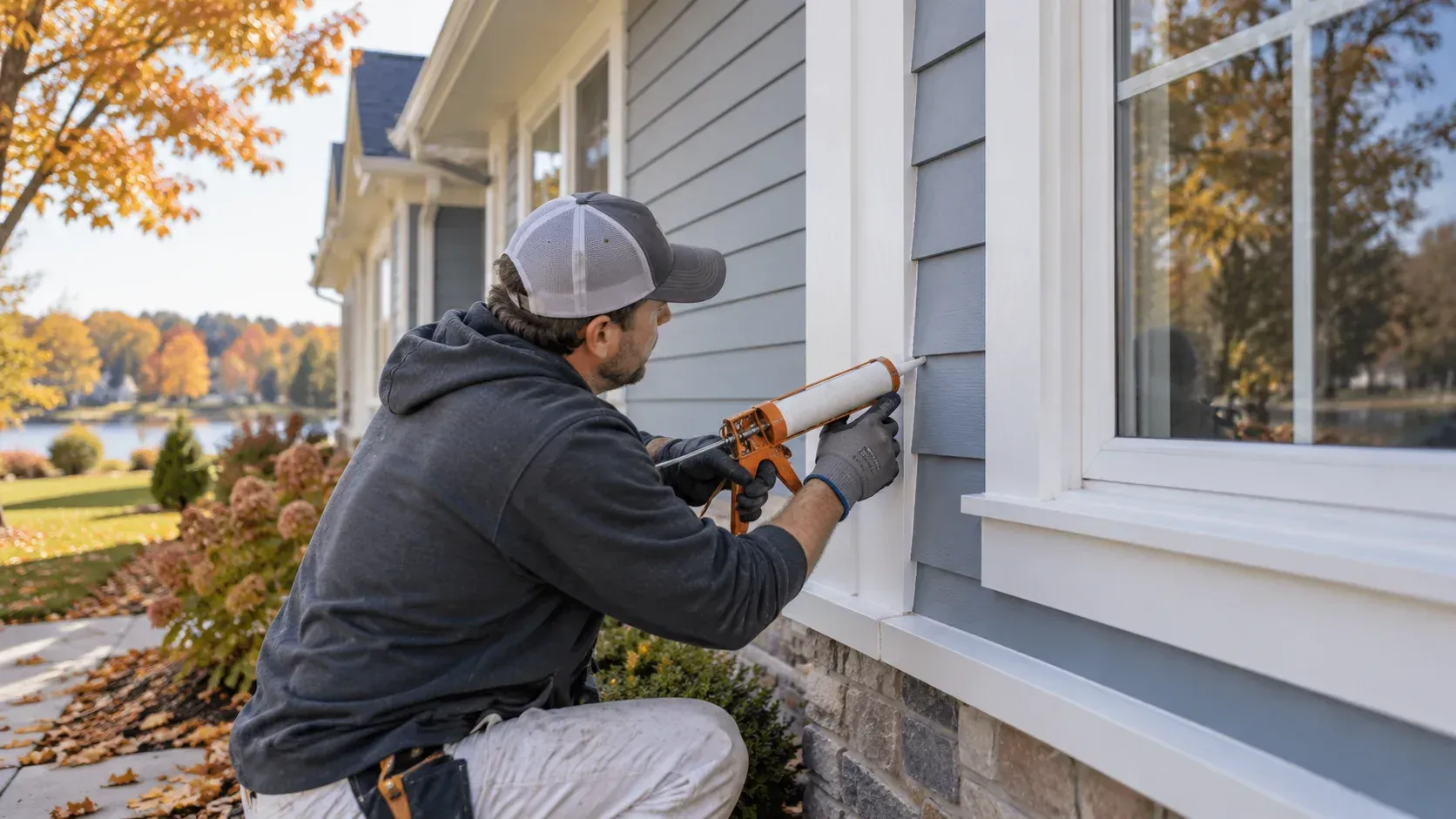
- Prep is defined (patching, sanding, caulking, masking, protecting floors)
- Cleanup expectations are clear
- Warranty terms are stated up front
That’s not bureaucracy—it’s how you prevent misunderstandings and keep the project moving.
If your project is mainly interior (walls, ceilings, trim, cabinets), check out our interior services.
Professional credentials usually signal better contractor selection
Most homeowners don’t want to become experts in contractor vetting. The shortcut is selecting painters who can prove they’re legitimate and stable.
When evaluating bids, don’t just compare price—compare risk.
A quick credential checklist
Ask each contractor:
- Are you licensed to operate in this area (or registered if licensing isn’t required for this scope)?
- Do you carry general liability insurance?
- Do you carry workers’ compensation (or proof of exemption if applicable)?
- Will you provide certificates upon request?
- Who will be on-site, and who supervises quality?
If any answer is vague, defensive, or full of excuses, treat that as data.
Use Thrift Painting’s contact page to request a written estimate and ask credential questions.
Cheap bids often get expensive fast
Low bids are tempting, especially if you’re painting to sell or preparing for a remodel. But the cheapest quote often wins by skipping the parts you can’t easily see until later:
- Inadequate surface prep
- Minimal priming (or none)
- Low-grade materials
- Rushed application
- No plan for repairs, rot, or stains
The cost shows up later as:
- peeling and premature failure
- uneven texture and visible lap marks
- bleed-through on ceilings or trim
- moisture issues on exterior surfaces
Pay once. Cry never.
Madison weather makes “doing it right” non-negotiable
In Madison, exterior painting isn’t just about color—it’s about durability through humidity swings, freeze/thaw cycles, and intense sun exposure in summer. Insured, professional painters are more likely to follow correct surface prep, moisture checks, and application windows so your paint system actually lasts.
That’s not theory. It’s the difference between a finish that holds up for years and one that fails early.
Work with a painter who’s accountable
When you hire a licensed and insured painting company, you’re buying more than labor—you’re buying predictability:
- fewer delays
- lower liability risk
- clearer standards
- better outcomes
If you’re in Madison, WI or surrounding communities and you want a painting project that runs clean and controlled, Thrift Painting can help you plan it correctly and execute it professionally.