Exterior Paint Touch-Ups That Survive the Freeze

How to Finish Exterior Painting Projects in Madison Before Winter Takes Hold
Wisconsin winters are unforgiving—especially to exterior paint. Once freezing temperatures arrive in Madison, rushed or improperly finished paint work can crack, peel, or fail entirely by spring. That doesn’t mean fall touch-ups are a bad idea. It means they need to be done correctly, using the right materials, timing, and techniques.
At Thrift Painting, we focus on exterior paint solutions that hold up through freeze–thaw cycles, snow load, and winter moisture—so homeowners aren’t repainting the same areas year after year.
Why Exterior Paint Fails in Winter
Paint failure is rarely about age alone. It’s usually about conditions.
Common winter-related causes include:
- Painting too late in the season without proper curing time
- Using interior-grade or low-quality exterior paints
- Moisture trapped beneath the paint film
- Inadequate surface preparation before cold weather
Once temperatures fluctuate around freezing, even small weaknesses turn into visible damage fast.
What Makes a Paint Touch-Up “Freeze-Resistant”
Not all exterior paints are created equal. For late-season or pre-winter projects, durability matters more than anything else.
Key characteristics to look for:
- 100% acrylic latex formulations
- Low-temperature application ratings (often down to 35–40°F)
- Strong adhesion to previously painted surfaces
- Flexibility to handle expansion and contraction
These paints cure more reliably and resist cracking when winter weather sets in.
Focus Areas That Benefit Most From Fall Touch-Ups
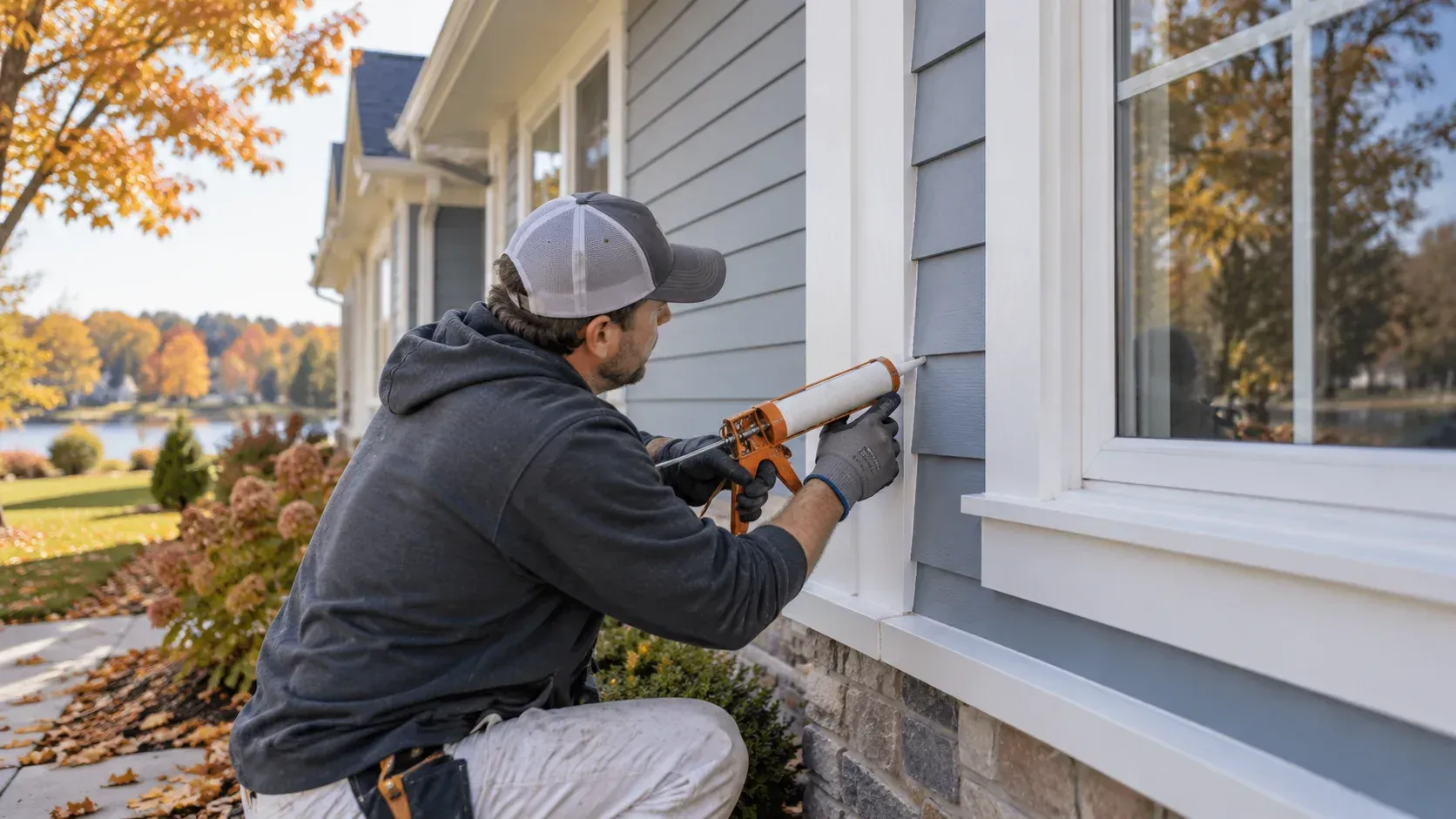
You don’t need to repaint your entire home before winter. Strategic touch-ups go a long way.
High-priority areas include:
- Trim, fascia, and soffits
- Window and door frames
- Exposed wood and previously peeling spots
- South- and west-facing surfaces (most sun and moisture stress)
Addressing these zones before snow arrives helps seal out moisture and prevent rot.
Timing Is Non-Negotiable
The biggest mistake homeowners make is pushing exterior painting too late.
Best practices:
- Paint when daytime temps stay above the manufacturer’s minimum
- Allow sufficient curing time before overnight freezes
- Avoid painting during high humidity or when frost is expected
Once paint freezes before curing, failure is almost guaranteed.
Surface Prep Matters More Than the Paint Itself
Cold-weather paint success starts before the brush hits the surface.
Professional prep includes:
- Removing loose or failing paint
- Sanding and feathering edges
- Cleaning surfaces of dirt, mildew, and chalking
- Spot-priming exposed wood or bare substrate
Skipping these steps just hides problems until spring exposes them again.
When to Stop—and Wait for Spring
Not every exterior project should be forced before winter.
Avoid late-season painting if:
- Temperatures are consistently dropping below recommended limits
- Surfaces remain damp or shaded most of the day
- Large-scale repainting is needed instead of targeted repairs
In these cases, professional assessment and spring planning is the smarter move.
Finish the Season the Right Way
Smart exterior paint touch-ups before winter protect your home, extend the life of your paint job, and reduce costly repairs later. The key is using the right materials, proper timing, and disciplined preparation.
Thrift Painting helps Madison homeowners wrap up exterior projects the right way—no shortcuts, no guesswork, and no paint that fails by April.
If winter is coming fast, the window is short. Make it count.