Prepping Decks & Exterior Wood for Summer Painting or Staining in Madison, WI

A May checklist to make your stain or paint last longer (and look better) all summer
May is the moment in Madison, WI when decks wake up again. Patio furniture comes out. Grills get fired up. Kids and dogs start running laps between the yard and the house. And if your deck boards look gray, your railings feel rough, or your stain is peeling, you’re probably thinking, “We should stain this before summer.”
That’s the right instinct—but the wrong first step.
If you stain or paint exterior wood without proper prep, you don’t get a “freshened up deck.” You get blotchy color, premature peeling, and a redo you didn’t budget for. The truth is simple: prep is the project. The coating is just the final step.
If you’re planning exterior work this season, start by understanding what a durable finish requires, then decide whether you want to take it on yourself or bring in a crew that handles exterior surfaces every week.
Why deck prep matters more than the product you buy
Most failures don’t happen because someone picked the “wrong stain.” They happen because the wood wasn’t ready:
- staining over mildew or embedded grime
- coating boards that still hold moisture after washing
- leaving loose peeling edges to telegraph through the finish
- skipping sanding so the surface stays fuzzy or too glossy to bond
- ignoring soft or damaged wood that no coating can stabilize
In Madison’s spring pattern—warm afternoons, cool nights, surprise showers—decks can look dry and still be damp where it matters. That one mistake can wreck the whole job.
Step 1: Inspect like a contractor, not a homeowner
Before you clean anything, walk the deck slowly and look for:
- loose boards, popped nails, or backing-out screws
- soft spots and rot (often near stair stringers, posts, and ledger areas)
- wobbly railings (a safety problem, not just cosmetic)
- splintering on handrails and stair treads
- widespread peeling from old coatings
If boards are soft or punky, stain won’t fix it. Paint won’t fix it. Replace what’s failing first, or you’re paying to coat a problem that’s still there.
Step 2: Clean it correctly (pressure washing can destroy wood)
A lot of people in Dane County go straight to pressure washing. Sometimes that’s fine—often it’s not.
Blasting a deck with too much PSI can shred the surface, raise the grain, and leave “fuzzy” boards that soak stain unevenly. That creates a rough feel underfoot and shortens the life of the finish.
What usually works best:
- a proper deck cleaner to lift gray oxidation and grime
- targeted mildew treatment if you see black spotting or slippery zones
- controlled rinsing or gentle pressure washing with the right tip, distance, and technique
If your deck looks “striped,” rough, or furry after washing, it didn’t get cleaner—it got damaged. Now you’ve added sanding work you didn’t plan for.
Step 3: Dry time is non-negotiable in Wisconsin spring
This is where most DIY jobs fail.
A deck can feel dry on top and still hold moisture inside the boards—especially in shaded backyards and north-facing setups common around Madison neighborhoods.
General guidance: after washing, you typically need 2–3 full dry days, sometimes longer depending on shade, humidity, and recent rain. If you coat too soon, you’re inviting:
- bubbling and peeling
- uneven absorption and blotches
- mildew trapped beneath the finish
If you want a deck that looks good through July and August, May is the month to be patient and do it right.
Step 4: Sand for adhesion and barefoot comfort
Sanding isn’t about perfection. It’s about getting the surface into a condition that can accept a coating evenly and safely.
Prioritize sanding:
- handrails (splinters + rough edges)
- stair treads (heavy wear + safety)
- any peeling areas (feather edges so they don’t telegraph)
- glossy or previously coated wood (degloss so new finish bonds)
If you’re dealing with peeling paint or solid stain, don’t “coat over it and hope.” That approach fails fast on horizontal surfaces in summer sun.
Step 5: Choose stain vs. paint based on the deck you actually have
Here’s the straight answer: the condition of your deck should drive the finish selection—not a photo you liked online.
Stain tends to be the better choice when:
- the wood is in decent shape and you want a natural look
- you’re maintaining an older stained deck
- you want easier future maintenance cycles
Paint or heavier solid coatings may make sense when:
- the deck has repairs and inconsistent wood tone
- you want a uniform color across mixed boards
- you understand it demands more prep and long-term maintenance
One caution: traditional exterior house paint usually performs poorly on deck floors unless the system is designed specifically for walking surfaces. If you want help making that call, it’s worth getting a professional opinion before you lock into a product and schedule, contact us first.
Step 6: Protect what you don’t want stained
Clean deck work looks effortless because the messy parts were handled in advance.
Protect and mask:
- siding and brick edges
- door thresholds and concrete landings
- landscaping and mulch beds
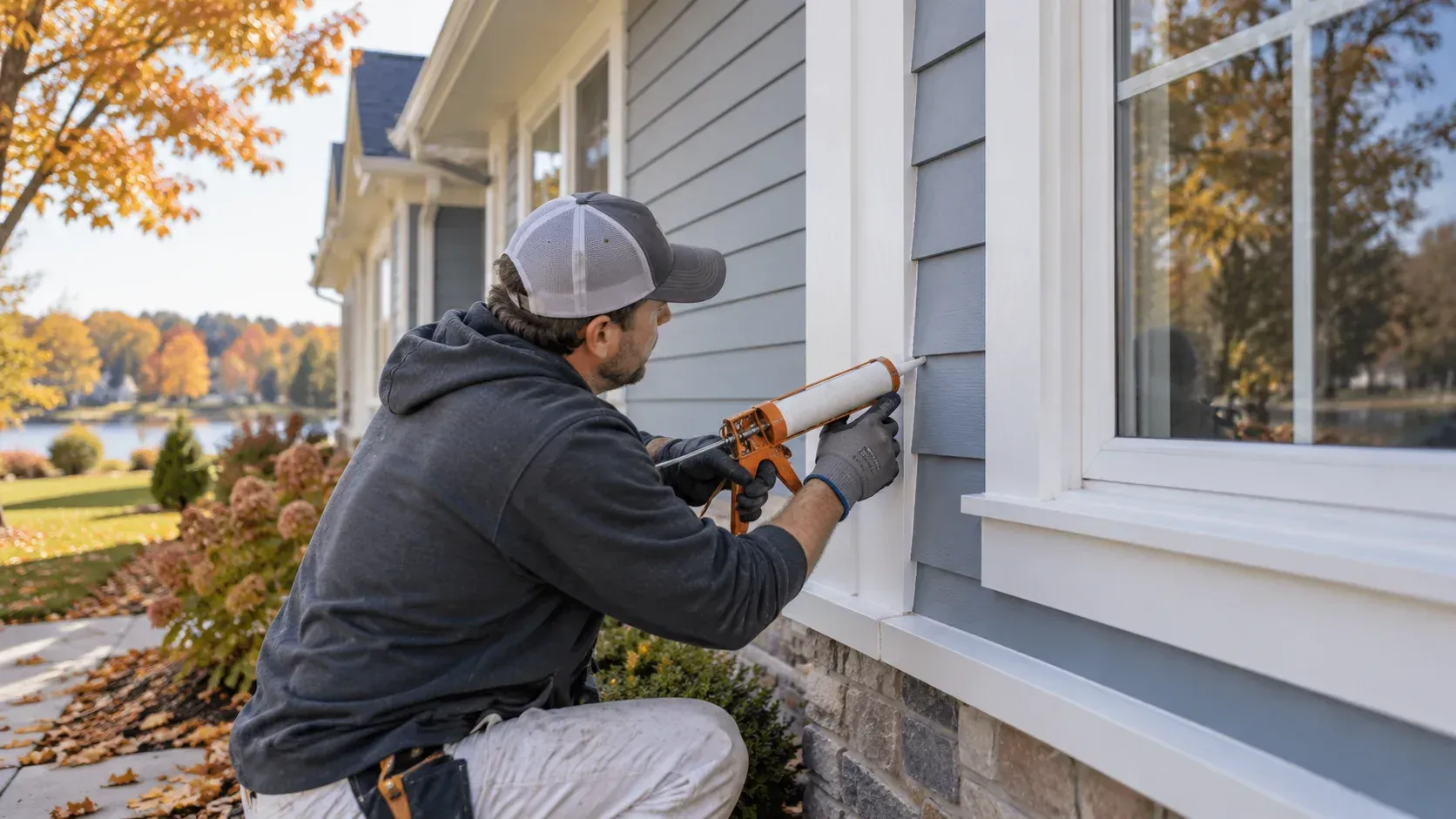
- windows, screens, and trim
This is where DIY deck jobs often look “almost great”—until you see overspray speckling on siding or stain drips along the foundation line.
A May deck prep checklist for Madison, WI homeowners
If you want a simple, repeatable plan:
- Inspect and repair loose/soft wood
- Clear furniture and debris
- Apply cleaner and mildew treatment where needed
- Rinse (gentle pressure if used)
- Dry thoroughly (don’t rush this)
- Sand splinters + feather peeling edges
- Spot-prime where appropriate (system-dependent)
- Apply stain or coating during a stable weather window
Done right, this gives you an even finish that holds up to summer traffic and Wisconsin weather.
Why May is the best timing in Madison
May is early enough to enjoy the deck all season, but warm enough for proper drying and cure time. Wait too long and you’re often working around sticky humidity, sudden storms, and busy contractor calendars.
If you want your exterior wood looking sharp for summer, May is when you win or lose the outcome.
Ready to prep and finish your deck the right way?
If you’re in Madison, WI or nearby areas and want your deck, porch, railings, or exterior wood properly prepped for staining or painting, Thrift Painting can help you avoid the common failure points and get a finish that lasts. Request an estimate.